
About Blue City Blues
The Blue City Blues podcast aims to give a national perspective on the present and the future of urban America, considering blue cities as a collective whole.
Twenty years ago...
Dan Savage encouraged progressives to move to blue cities to escape the reactionary politics of red places. And he got his wish. Over the last two decades, rural places have gotten redder and urban areas much bluer.
America’s bluest cities developed their own distinctive culture, politics and governance. They became the leading edge of a cultural transformation that reshaped progressivism, redefined urbanism and remade the Democratic Party.
But as blue cities went their own way,
as they thrived as economically and culturally vibrant trend-setters, these urban cosmopolitan islands also developed their own distinctive set of problems. Inequality soared, and affordability tanked. And the conversation about those problems stagnated, relegated to the narrowly provincial local section of regional newspapers or local NPR programming.
The Blue City Blues podcast
aims to pick up where Savage’s Urban Archipelago idea left off, with a national perspective on the present and the future of urban America. We will consider blue cities as a collective whole.
What unites them? What troubles them? What defines them?
Emily Dufton on the Maddening History of Our Broken System for Treating Opioid Addiction
Elected on a law-and-order platform, Richard Nixon launched the War on Drugs with a June 1971 press conference in which he declared drug abuse on the streets of American cities to be “public enemy number one.” Or so the conventional narrative goes. But drug historian Emily Dufton says that the true ...
Our Team

Host
Sandeep Kaushik
Sandeep Kaushik is an experienced political and public affairs consultant based in Seattle, with expertise in public relations, political communications, and strategic advisory work for elected officials, civic leaders, governments, and non-profits. He has worked on multiple political campaigns, including those for Seattle's last two mayors and several successful ballot measure campaigns. His current practice focuses on high-profile policy issues such as affordable housing, ridesharing, short-term rental regulation, transit funding, and universal pre-K.
Sandeep has a background in communications, having served as deputy communications director for King County Executive Ron Sims and as a political columnist for Seattle's The Stranger and a correspondent for Time Magazine and the Boston Globe. He holds degrees from Reed College and Princeton University and serves on the executive committee of the Downtown Emergency Services Center.
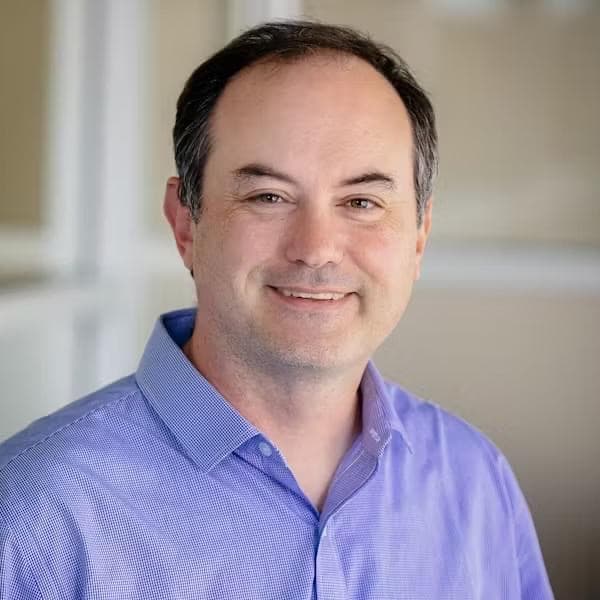
Host
David Hyde
For nearly 2 decades, David Hyde worked for NPR-affiliate KUOW in Seattle, most recently as a Murrow-award winning politics reporter. He departed in 2024 to dedicate himself full time to podcasting and other journalism and writing projects. Blue City Blues builds on the success David had creating Seattle Nice. Each week Blue City Blues takes a deep dive look at the many shared issues facing blue cities.
Reviews
What the people say about us
Excellent and thoughtful show with deep insights
I really enjoy David Hyde and Sandeep Kaushik’s brand of podcasting with original thoughtful and intelligent analysis and great guests. I have learned a lot from unusual interviews and interesting commentary.
Great show!
Smart dialogue.
Thoughtful, unique
I recently found Blue City Blues and really enjoy it. Good for anyone living in an urban environment who cares about cities and their future. Particularly since the pandemic city living has been a mixed of vibrancy with so many challenges. They dig in and have great guests.